Choosing within this department
Movement, hand & stem tools
Choose the component and operation before comparing tool size. Supporting an uncased movement, placing a hand, holding a stem and cutting or smoothing a small opening call for different contacts. This department brings those manual tools together, from adjustable movement holders to specialized balance supports and service equipment. Compare like functions first; a tool used beside another tool is not necessarily its substitute.
Support the movement or the particular assembly
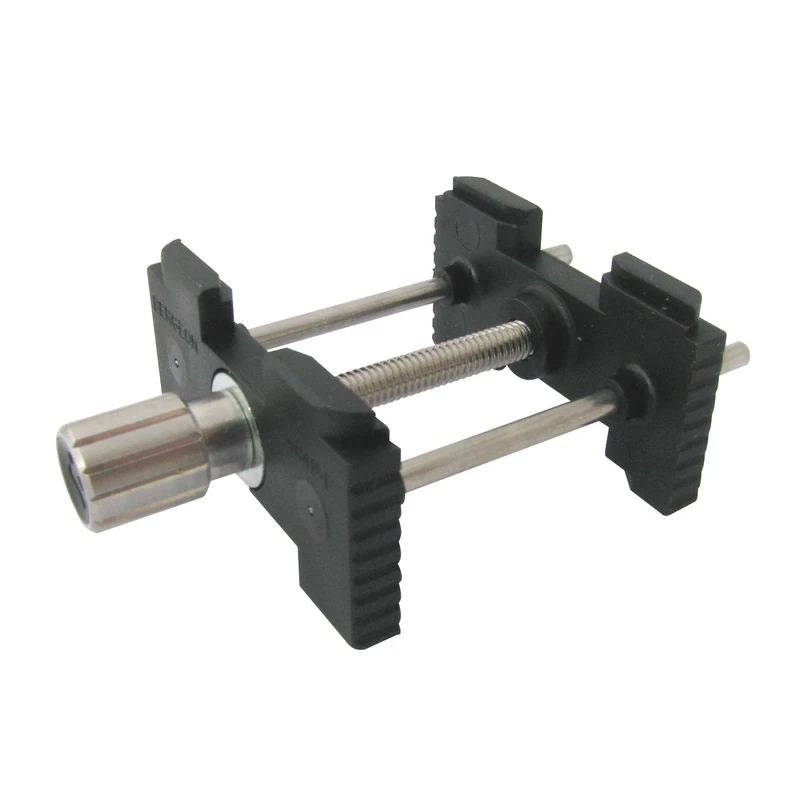
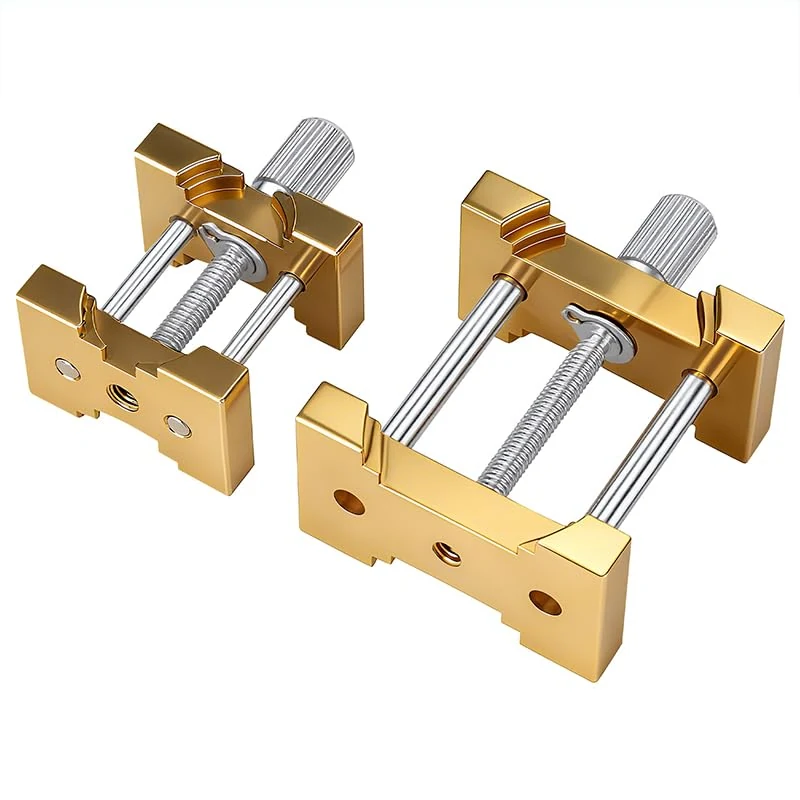
The Bergeon 4040-P is a reversible, extendable synthetic holder with a stated 20–43 mm movement range. The Singcci GDQ4311 instead supplies two different-size screw-adjusted holders. It does not provide an exact capacity for each, and its brass/pure-copper wording is unresolved. Choose between a specified movement range and the actual contact layout of the paired holders, rather than relying on their appearance alone.
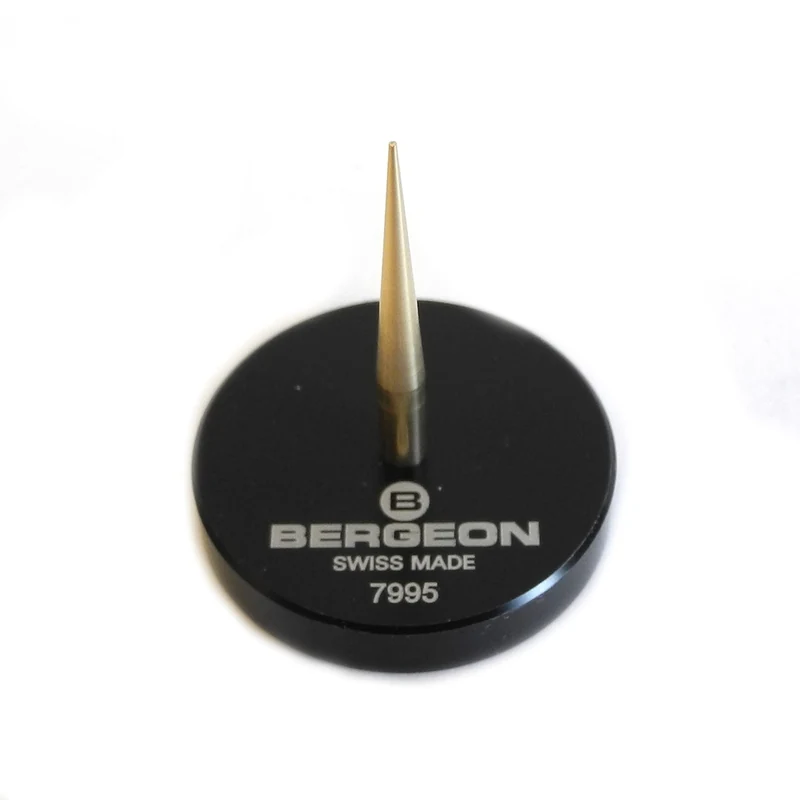
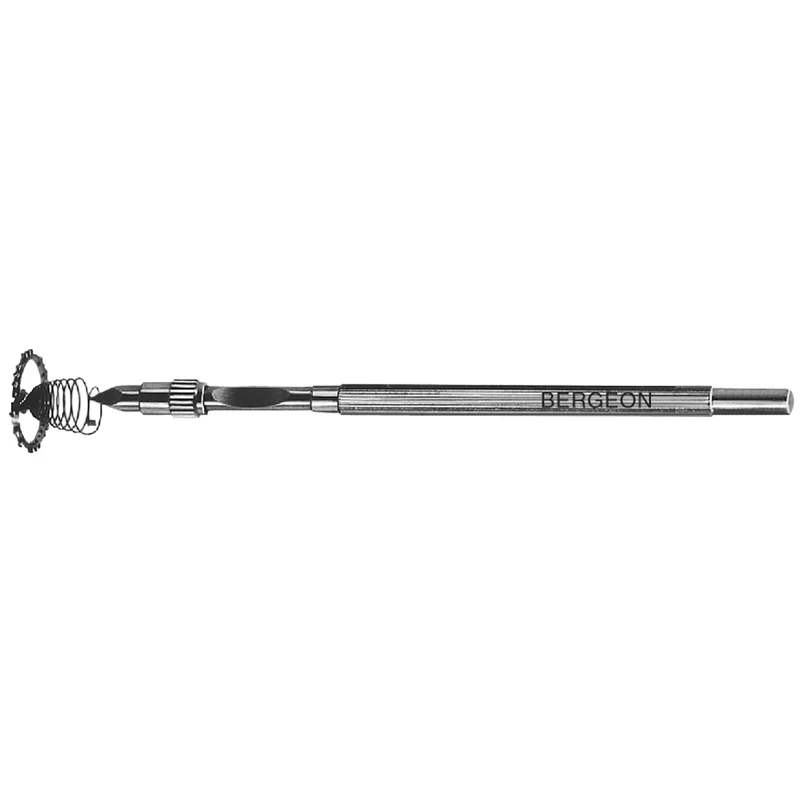
More specialized supports address smaller assemblies. The Bergeon 7995 positions a balance-cock with its balance spring during corrections; the Bergeon 4072 is a 105 mm stainless-steel pin vise specifically for holding hairsprings. These are different holding contacts, not compact substitutes for an entire-movement holder. Match the balance-cock contact or spring access needed for the particular movement.
Separate removal, placement and setting
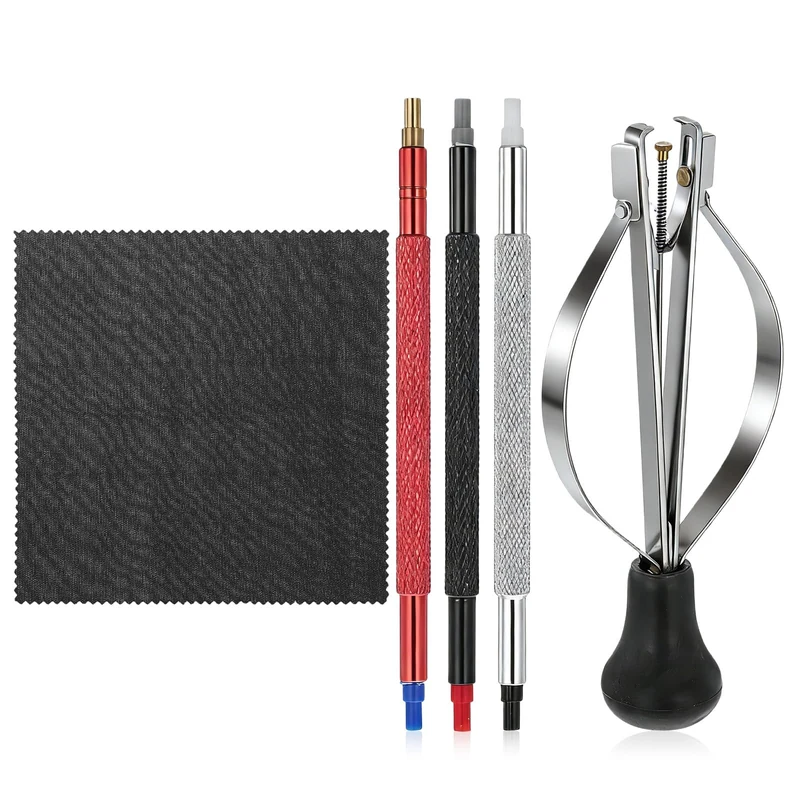
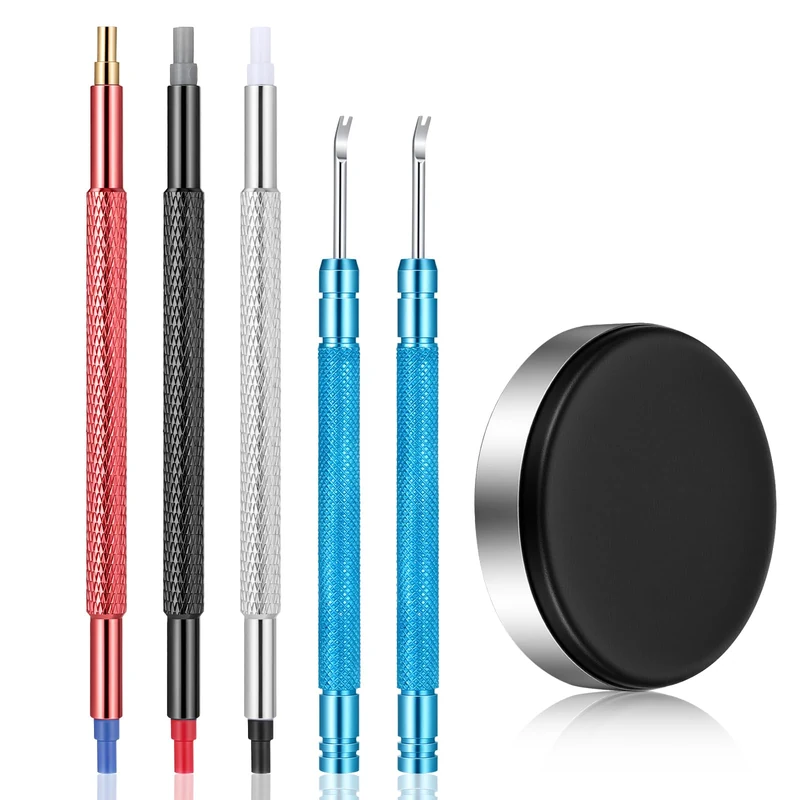
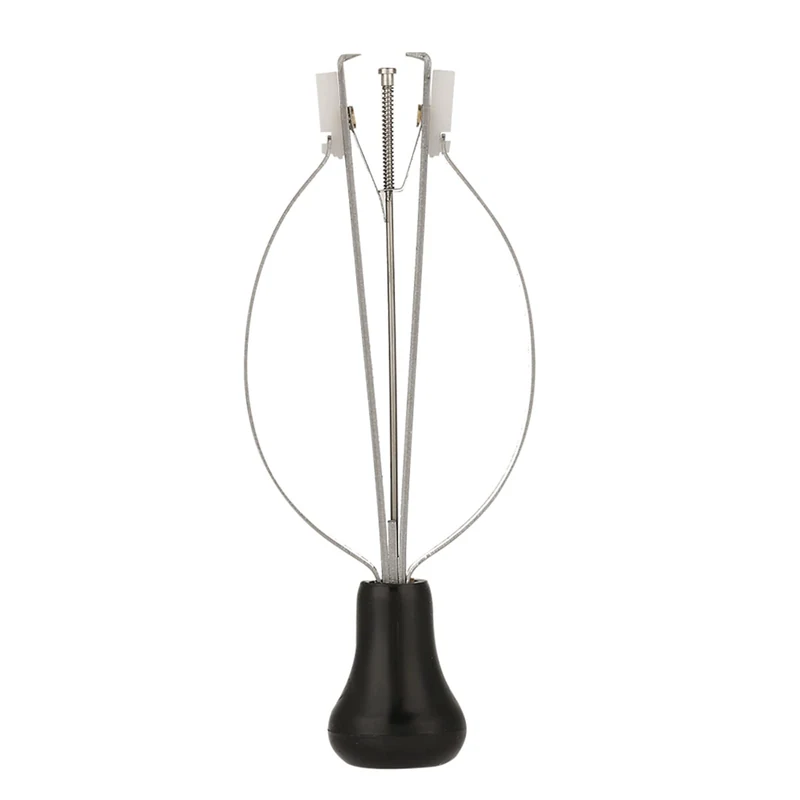
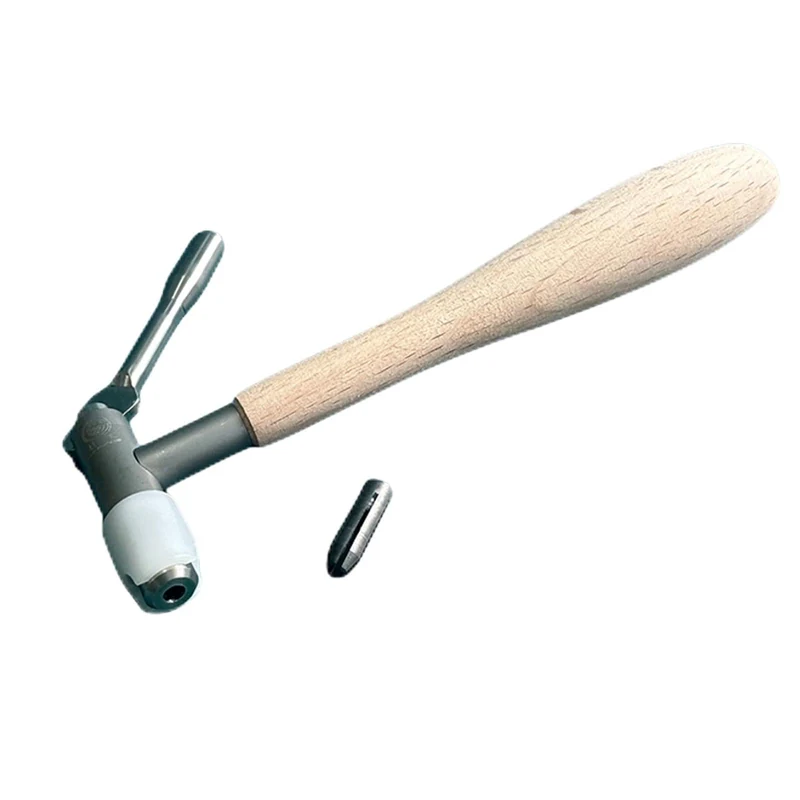
For hand removal, the FILFEEL tool uses a spring-bow and central-plunger format with plastic tips. The Xelsluthe kit combines that style of remover with three setting pens and a microfiber cloth. The guduling kit supplies three setting pens, two separate lifting levers and a round cushion instead. The choice is between the removal formats and the supporting contents, not simply three similar pen colors.
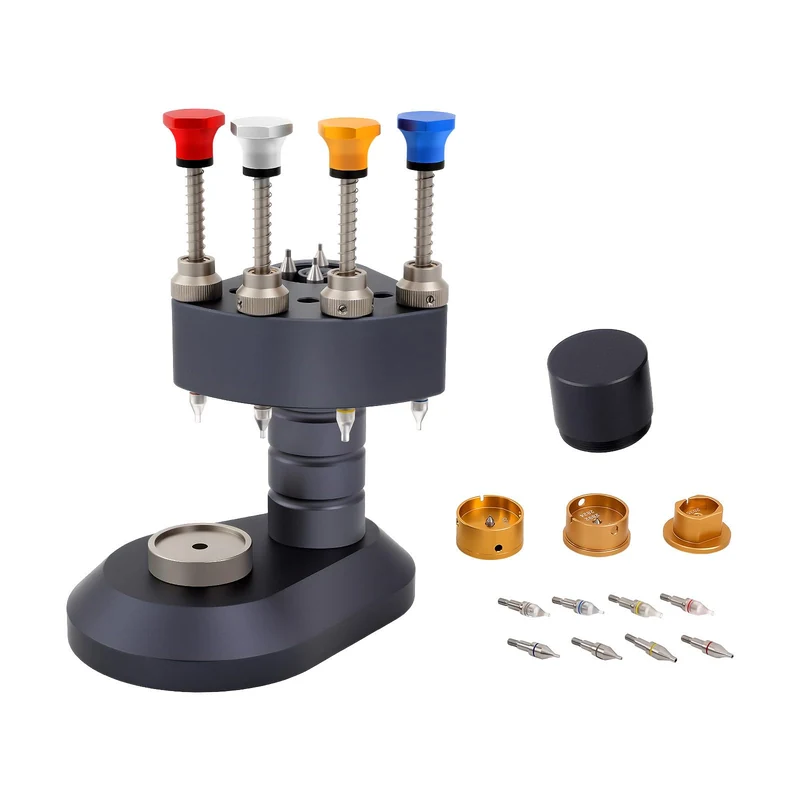
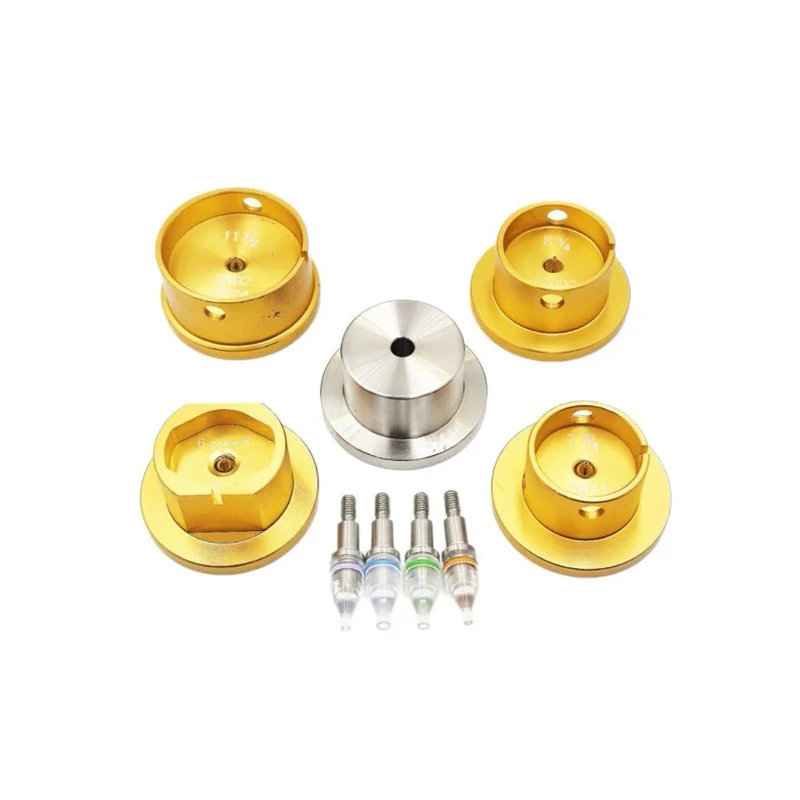
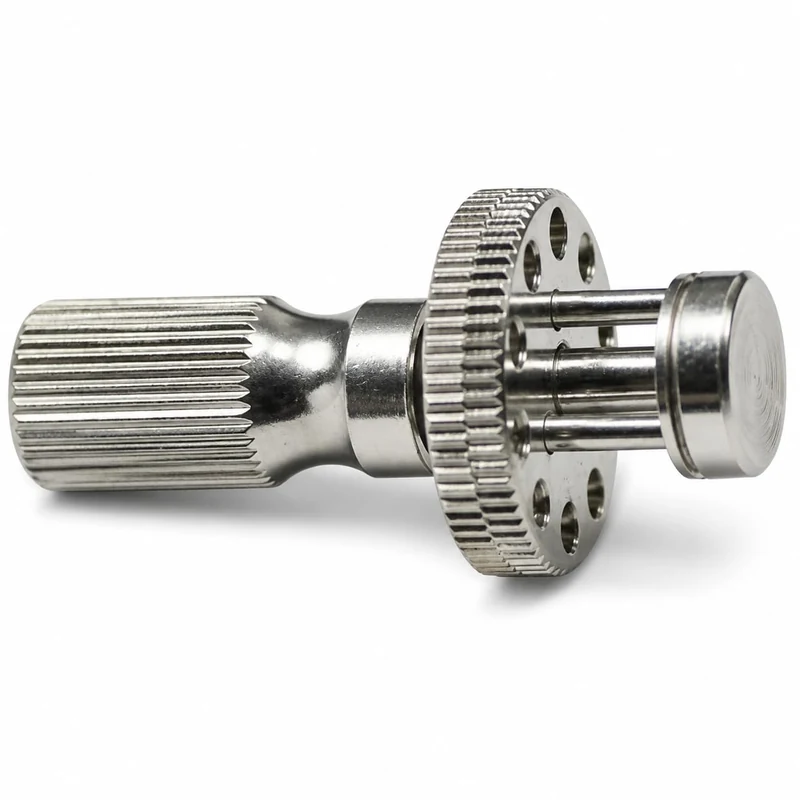
The three-pen kits use silver 0.6–1, black 0.8–1.5 and red 2–3 mm labels. Treat these as the stated pen-contact labels rather than continuously adjustable ranges, and check the hand/contact geometry. For a bench arrangement, the AGULIUM press has four selectable positions, eight tips—four steel and four acrylic—with 0.6, 1.2 and 1.6 mm apertures plus a solid profile, and three bases labeled 2035, 2824/2892 and 3135. Those labels do not establish universal caliber fit.
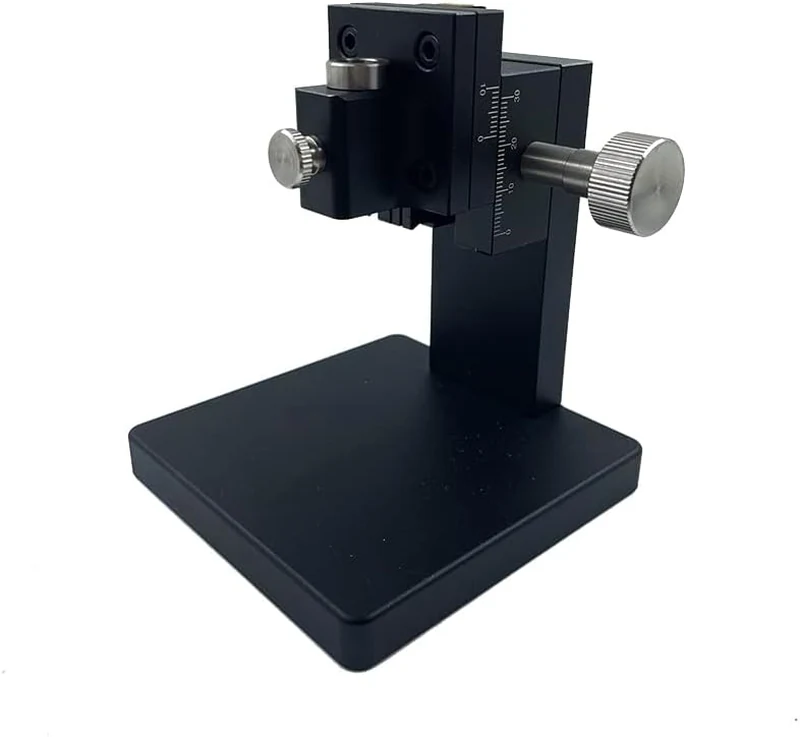
Check whether an offer supplies the frame you need. The Tizuqe assortment is four acrylic tips, four holders and a metal base, not an upright press. The SmaSoHard RP6173 is a bare stand with a nominal 8 mm receiving hole, not a hand tool or movement holder. If you already own a compatible tool, these may fill a specific gap; confirm the actual receiving shape, fastening and clearance before combining them.
Choose handheld or bench-fixed workholding
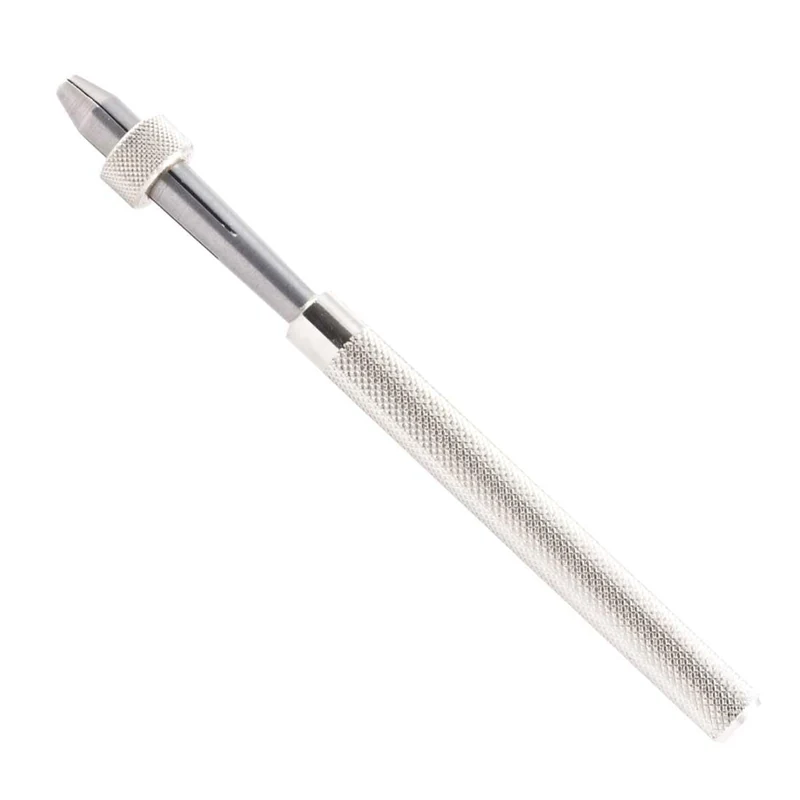
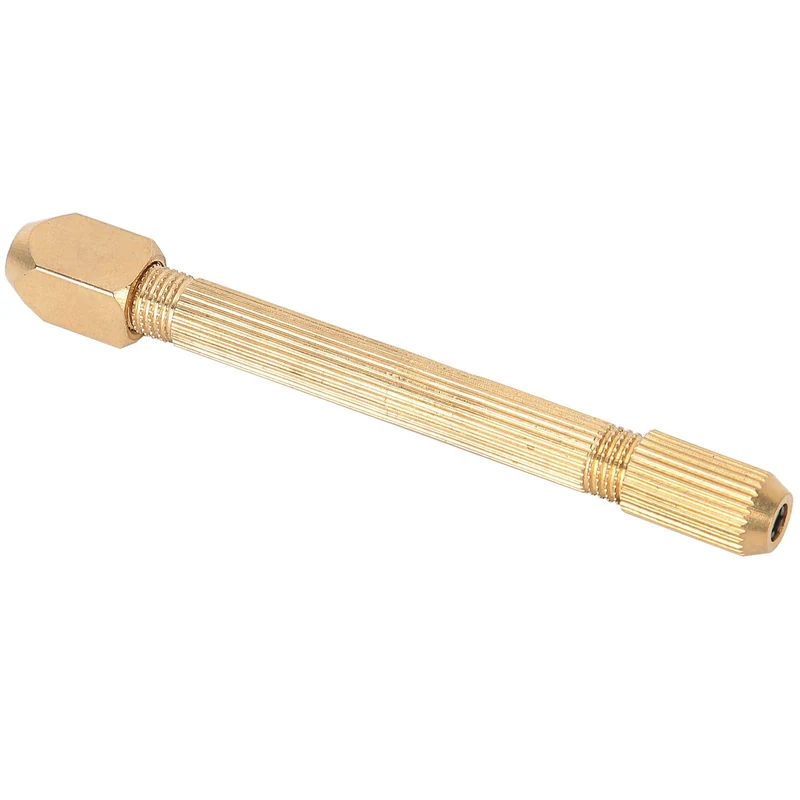
The Horotec MSA02.030 uses a slide-locking chuck labeled 0–1.5 mm and a nickel-plated handle. The Buachois pin vise instead has a textured tube body, two screw-on end caps and two removable collet pieces. Its listing disagrees between a 0–3 mm title and narrower, unmapped detailed ranges, and explicitly allows old/new types to ship randomly. Choose that construction only after confirming the actual collet fit; it is not an established continuous 0–3 mm holder.
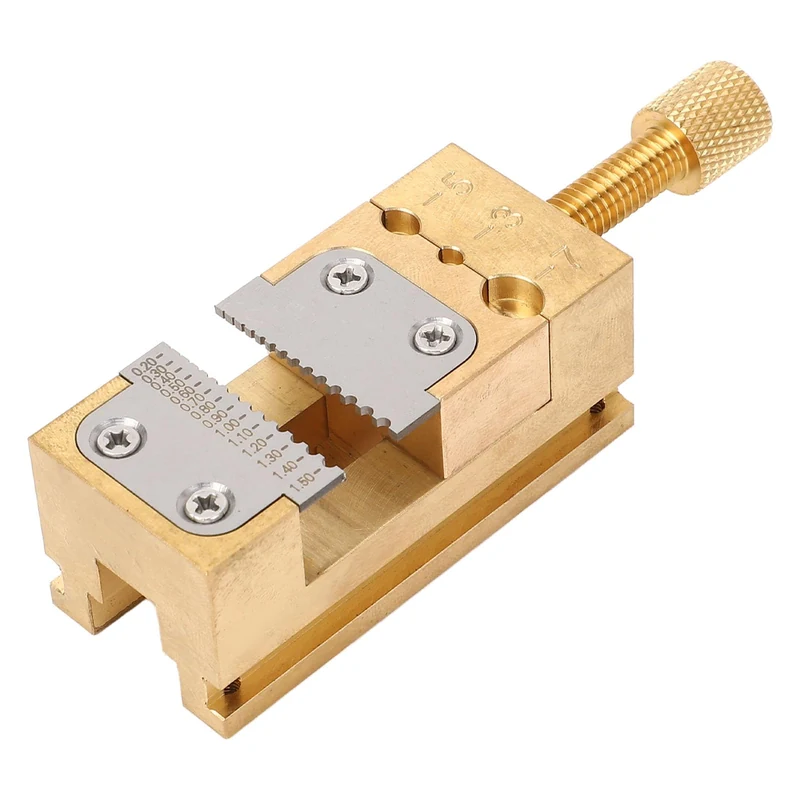
For work kept at the bench, the FOSA copper split-plate vise is described for hands, wheels and pin tubes. Its 0.2–1.5 mm label concerns support holes, not jaw travel. The KiBcsLic 3007 is a screw-closing multi-hole block for small movement parts, with no exact hole schedule and conflicting outside dimensions. Compare the actual support opening and access before choosing either; neither supplies a cutting broach.
Match cutting, smoothing and support separately
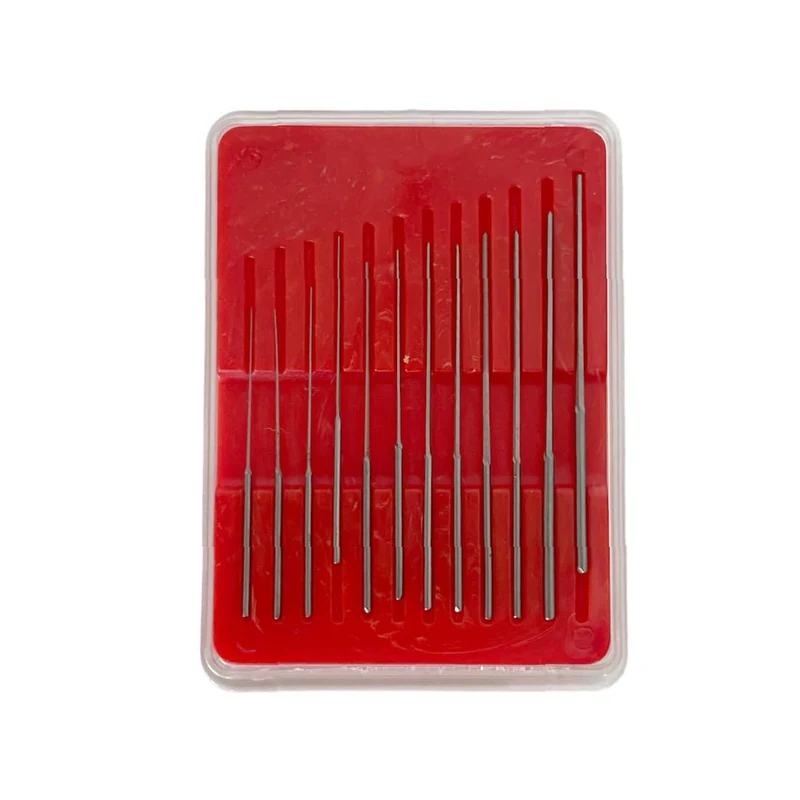
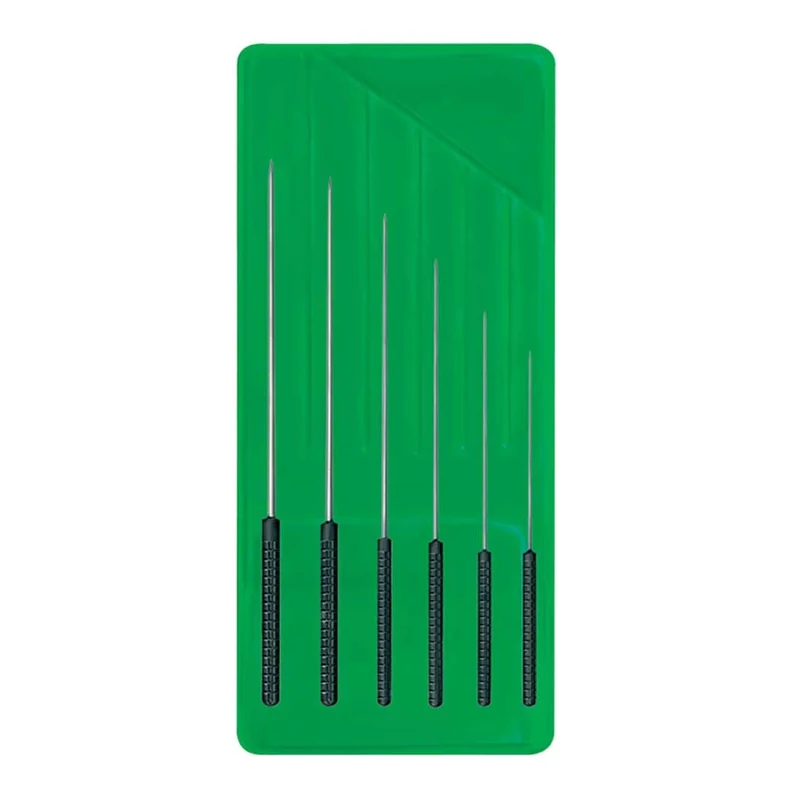
The Beco Technic 31408 assortment contains twelve steel tapered cutting broaches with square cutting edges and a stated 0.05–0.55 mm range. It does not itemize a holder or give all twelve individual sizes. The Horotec MSA02.221 instead supplies six handled smoothing broaches, sized 0.40, 0.60, 0.80, 1.00, 1.20 and 1.40 mm, in a plastic pouch. The documented operation differs: the smoothing assortment should not be chosen as though it supplied the other set’s cutting edges.
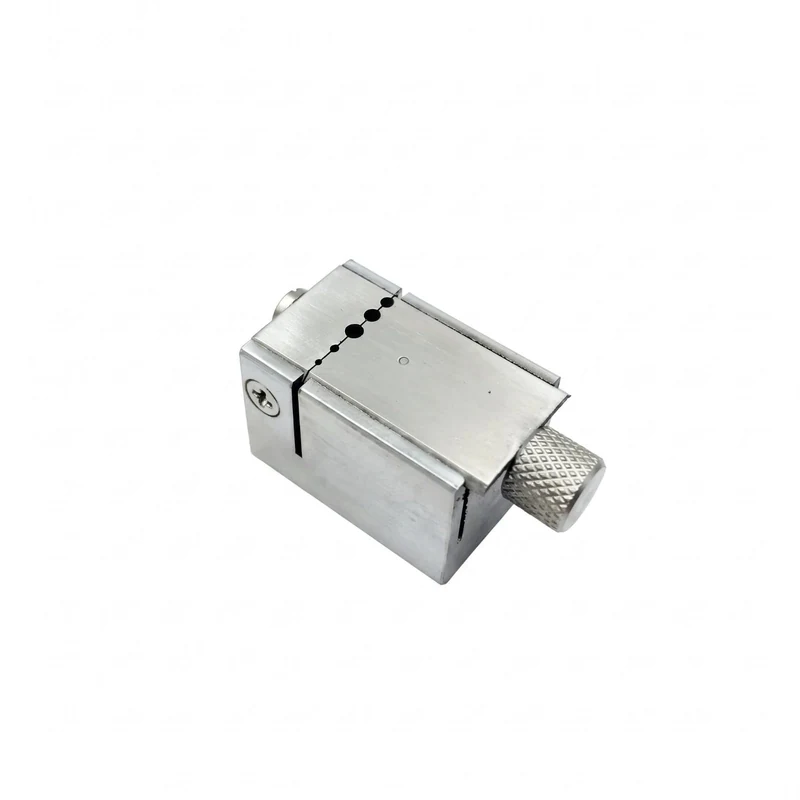
The TAURISH watch-hand broaching fixture supplies the support: squeezing its ends opens two vise plates. Broaches are not itemized with it. Check the hand’s contact, plate clearance and the separate working tool’s receiving interface. A broach’s working-size label is not automatically its shank diameter, and the holder’s chrome-plated appearance does not resolve the conflicting steel/brass body descriptions.
Keep stem cutting and tube work distinct
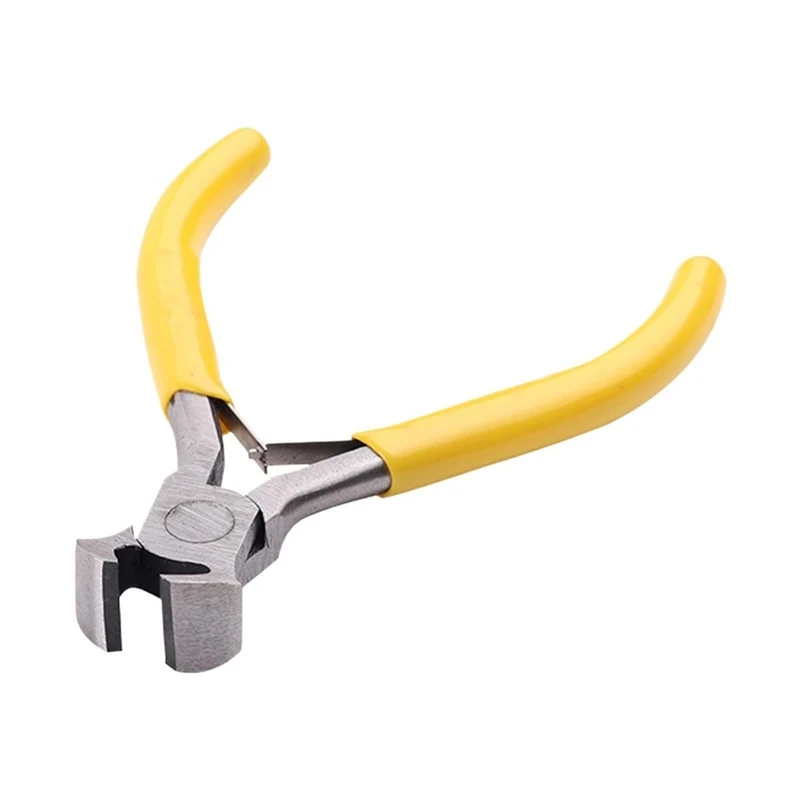
The yellow CCZKXZXY pliers are explicitly offered for shortening winding stems, with rubber grips and a spring between them. The supported offer is one manual end-cutting plier; a maximum diameter, stem-metal specification and hardness capacity are not given. Choose only after obtaining the capacity needed for your actual stem, rather than inferring it from the head size.
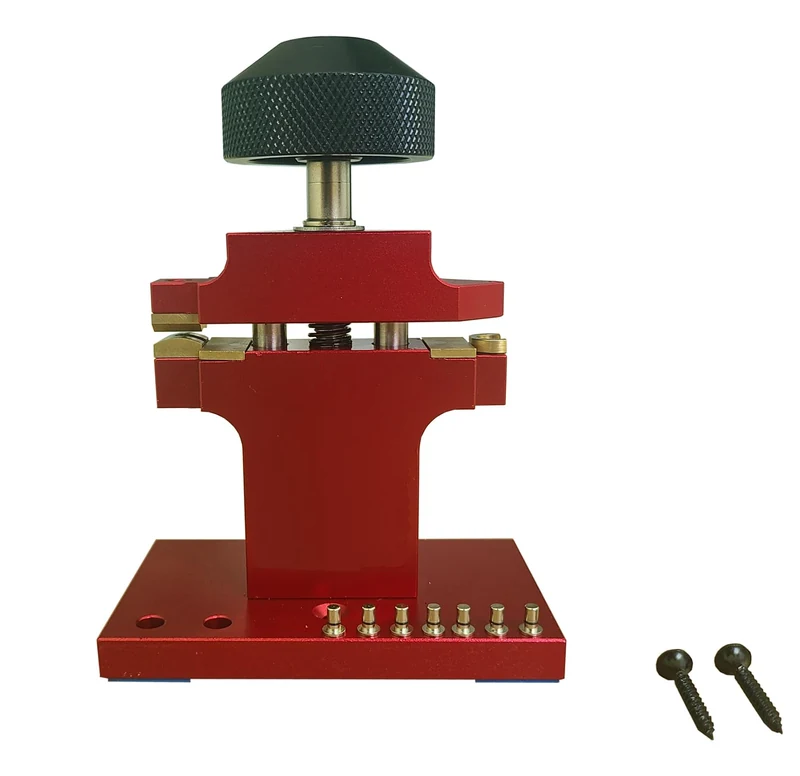
The OTOOLWORLD tool is a hand-powered bench frame for tube work with seven mini tubes. Its 3.94 × 2.36 × 5.12 inch exterior does not specify the working attachment diameters or travel. The SmaSoHard KD89 has another role again: a wooden-handled cannon-pinion removal lever with a seller fit label of 1.2–1.8 mm. Neither the tube fixture nor the pinion lever is a replacement for a stem cutter or a hand puller.
Choose service tools by the exact operation
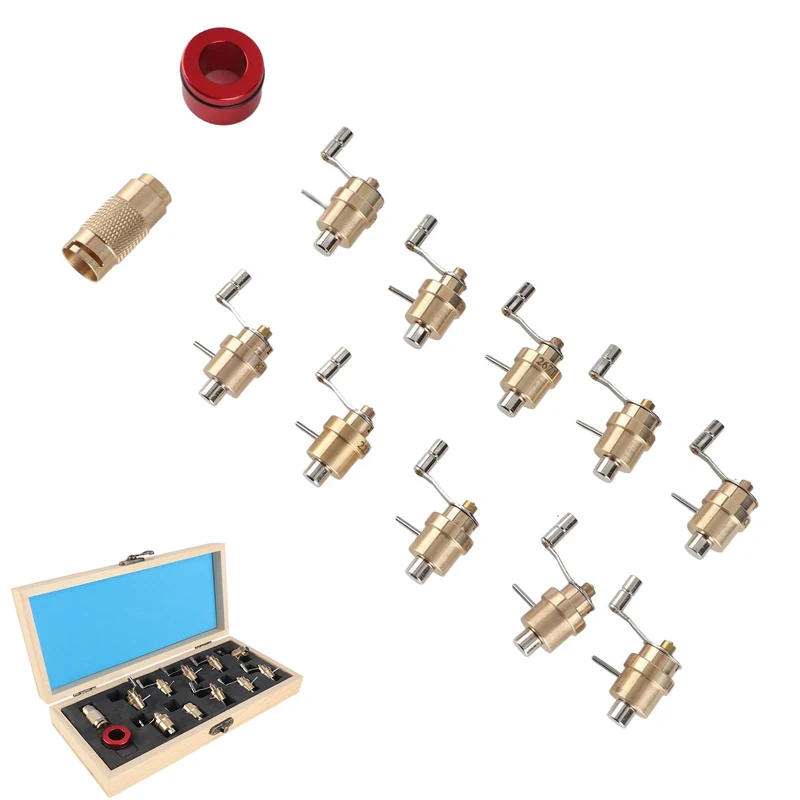
The lvifloae mainspring-arbor winder assortment supplies ten arbors, brass winders and textured metal handles in a bamboo compartment box. Its movement-group labels do not map each of the ten arbors or establish winding direction. The Bergeon 31409, by contrast, contacts an external crown through an elastomer interface, with a 2.5–10 mm opening. An arbor-winding assortment and a crown-contact tool address different tasks; the opening alone does not establish a match to every crown shape.
The GUHOFIND plastic barrel-cover closer concerns the cover on an internal barrel drum, not the watch’s external back. Its small description dimensions disagree with a larger size field, leaving the exact fit unresolved. The Bergeon 6892 is a moon-phase corrector offered for triple-calendar watches with moon phases: match the actual external corrector contact and watch maker’s instructions rather than assuming a universal correction tool or schedule.
Compare a guided frame with a separate support block
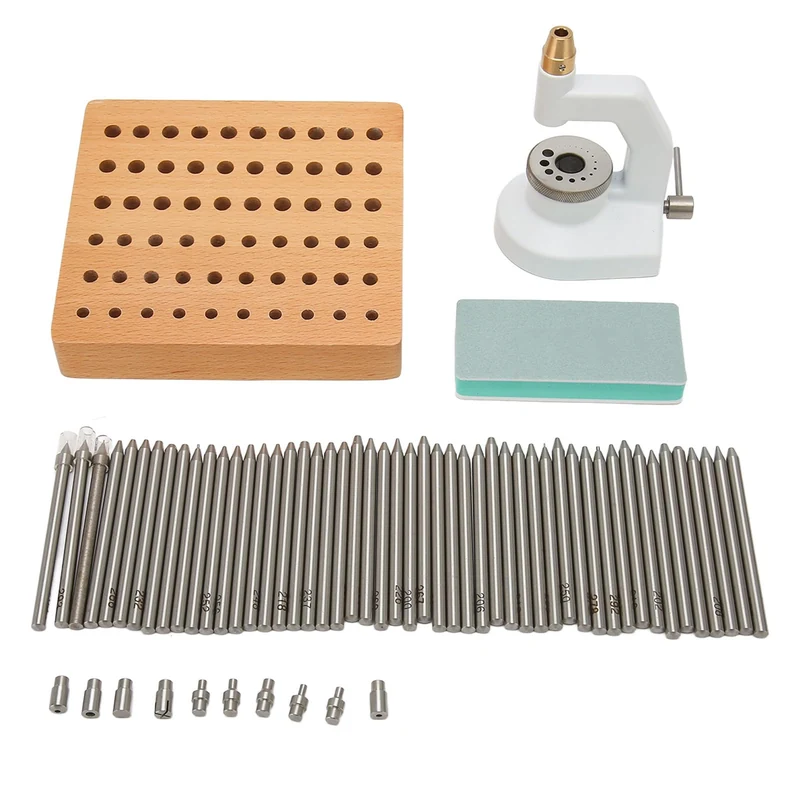
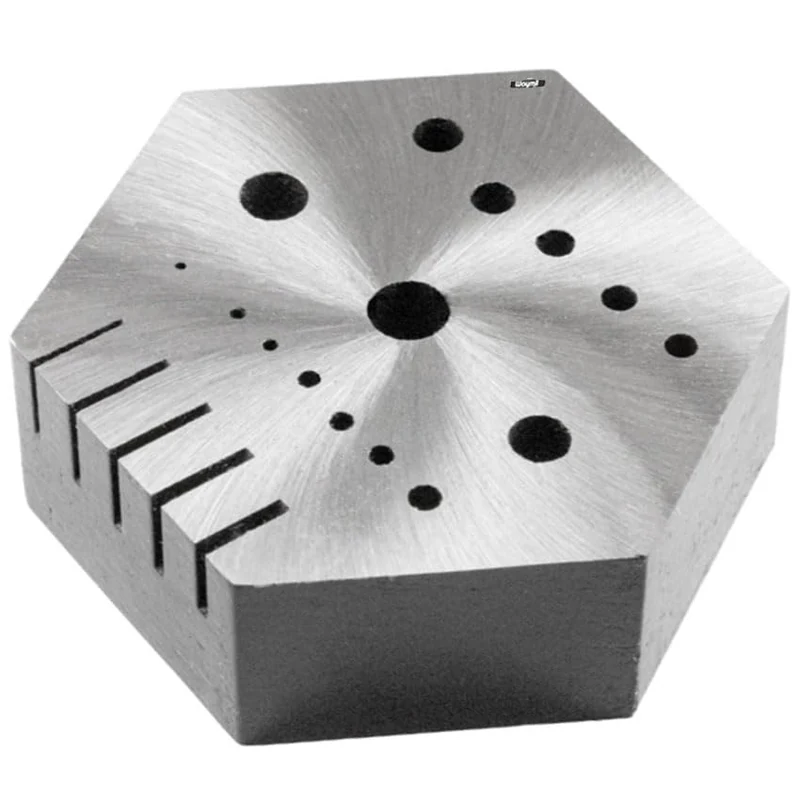
The BONKZEBU staking system itemizes a frame, fifty punches, ten stakes, a base and sponge. The Waymil hexagonal anvil is one hardened-steel support block with ground-flat polished faces, fifteen holes and five slots. The latter provides support openings without supplying a guided frame or punch assortment. Its listed hole range of 3/64–1/4 inch, rounded as 1.2–6.4 mm, is not a complete dimension list for every hole.
Choose the bearing surface, opening and access needed for the actual part, then account for the separately required working equipment. Neither a large punch count nor the outside dimensions of a frame establish a force rating, calibrated depth or universal movement fit. The service-interface guide helps keep these receiving and working dimensions separate.
Examples for the working choice
Questions before you choose
Should I buy a movement holder or a balance support?
A whole-movement holder such as the 4040-P supports an uncased movement around its holding contacts. The 7995 instead positions a balance-cock and spring assembly, while the 4072 holds hairsprings. Choose the support for the actual component and access required.
What do I need to check before buying hand-setting accessories for an existing tool?
Check whether the offer includes a complete press or only a base, holders or tips. Tizuqe supplies an accessory assortment; RP6173 is a bare stand with a nominal 8 mm hole. Match the actual shank, fastening and clearance—8 mm alone does not establish an interchangeable system.
How do I choose between cutting and smoothing broaches?
Choose the documented operation first. The Beco 31408 set has tapered square cutting edges; the Horotec MSA02.221 is a handled smoothing assortment. Compare their working sizes and separately needed support or holder, without treating either range as a promised finished-hole tolerance.
Can a pin vise replace the stem cutter?
No: it is a holding tool. The CCZKXZXY is specifically offered for shortening stems, while the Horotec MSA02.030 holds a part in a slide-locking chuck. They can be separate needs in a setup, but the cutter’s actual material/diameter capacity and the holder’s contact must each be checked.
Continue your selection
Selected listing details and reviewed source images inform these buying comparisons; exact fit and required service methods remain specific to each product and watch.