Choosing within this department
Tweezers & dial protection
Choose the working ends for the part and the access around it. Fine straight points, rounded angled ends, wood contacts and slightly flexible flat plastic ends have different documented roles in this range. Dial-protector sheets and films add coverage rather than gripping a component. Compare contact geometry, material and the space around the dial or cell before selecting a tool.
Compare fine points with raised-marker access
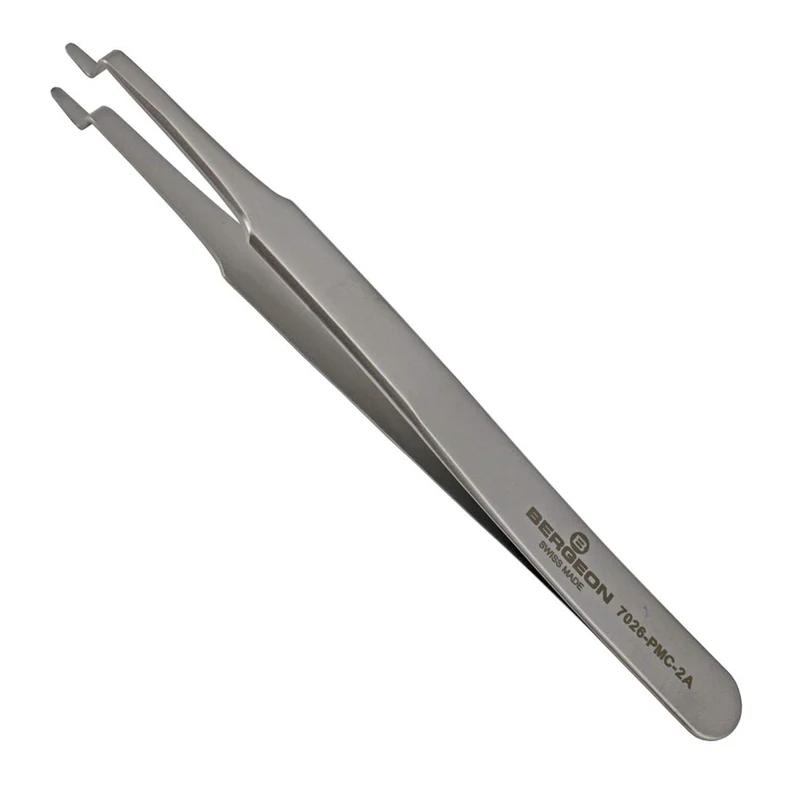
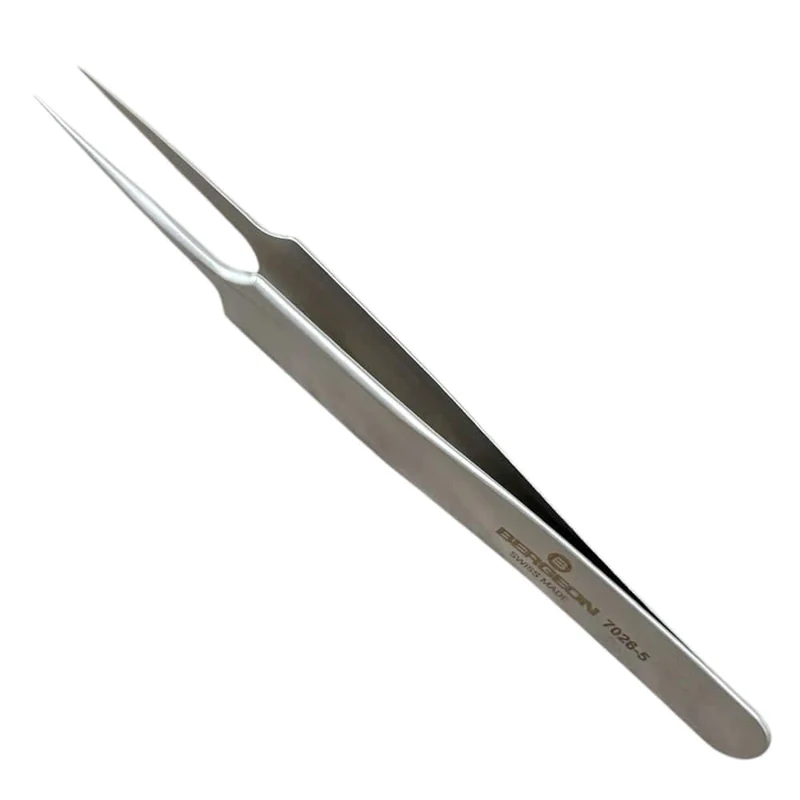
The Bergeon 7026-5 is a 110 mm steel tweezer with straight, fine-pointed ends. The Bergeon 7026-PMC-2A instead has rounded tips, a 90° neck and a 120 mm overall length, and is described for hand placement around high dial markers. Choose the actual access shape you need rather than treating the two 7026 models as the same profile in different lengths.
Placement is not the same operation as pressing a hand into position. The angled model provides a placement contact, not a force-setting press. If your setup also needs a setter, compare the separate hand-tool department and check the hand, marker and stack clearances for each tool.
Choose the material at the actual working tip
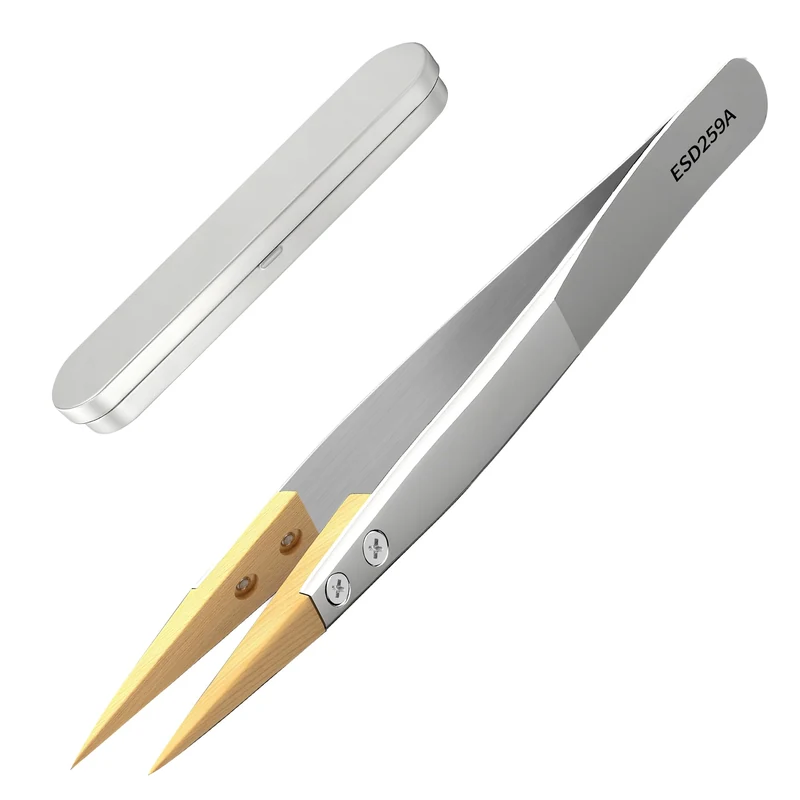
The Singcci pointed tweezers combine boxwood working tips with a stainless-steel-listed body and matte grip area. That distinction matters when you want wood at the contact without assuming the whole tool is wooden. The offer itemizes one tweezer; the pictured case is not expressly included. No exact tip-opening range is supplied.
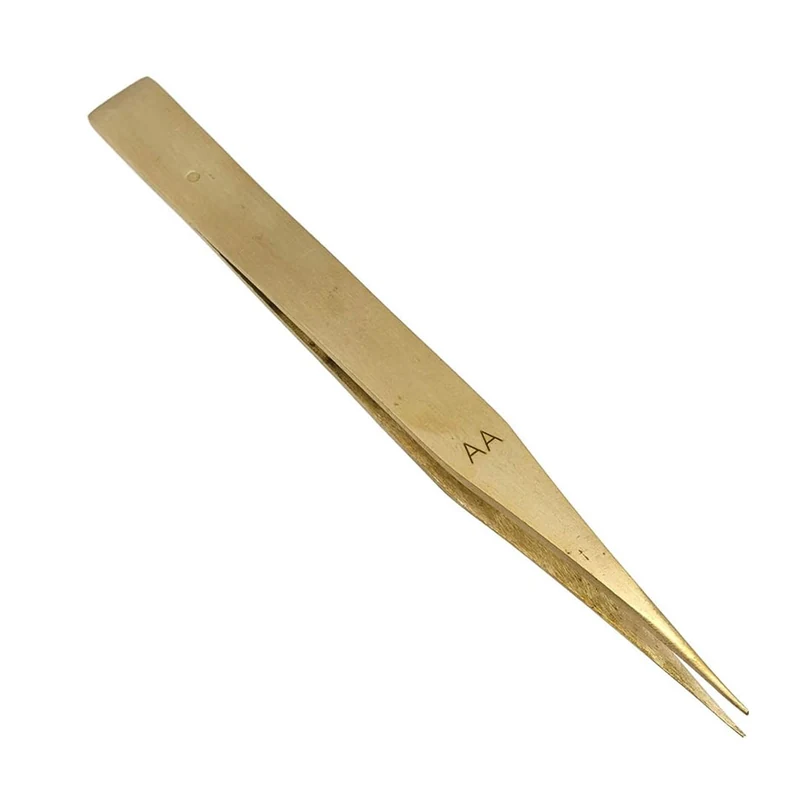
The SE AA-BRASS is a brass #AA-pattern tweezer approximately 127 mm long, with an antimagnetic seller claim. It is a different contact-material choice from the steel Bergeon 7026-5 and the Singcci wood-tip model. Compare the actual profile and opening for the component; the brass description does not establish a particular alloy grade or a guaranteed mark-free result.
Select a battery-contact tool for its shape
The Bergeon 55-043 has flat, slightly flexible plastic working ends and is explicitly offered for transferring and placing watch batteries. Non-conductive and non-magnetic properties are stated for this tool. These are useful selection features alongside the flat contact, without implying a certification or an exact cell-size range.
Compare the actual clearance around the cell and the end shape required. A fine-point steel tweezer and the 55-043 do not become interchangeable merely because both can be described as small-part tools. Battery access and the watch’s model-specific service requirements are separate from choosing the handling contact.
Choose coverage around the work area
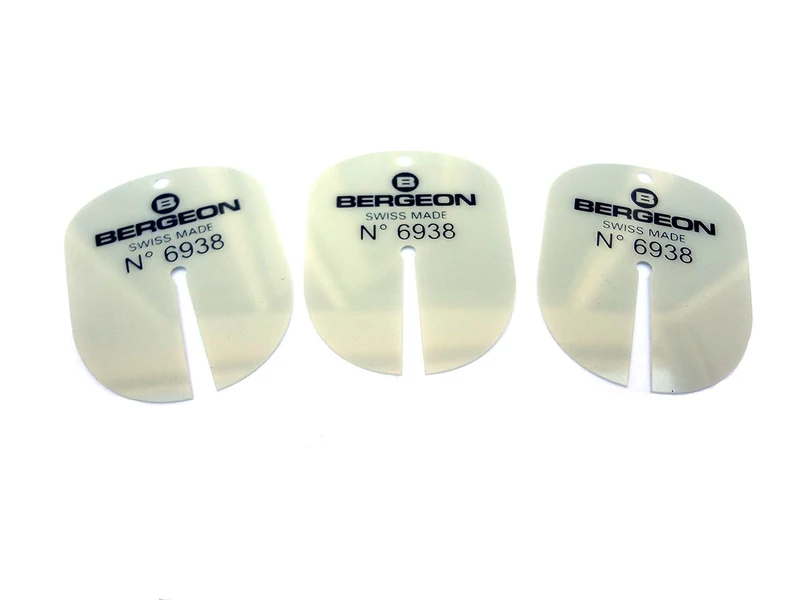
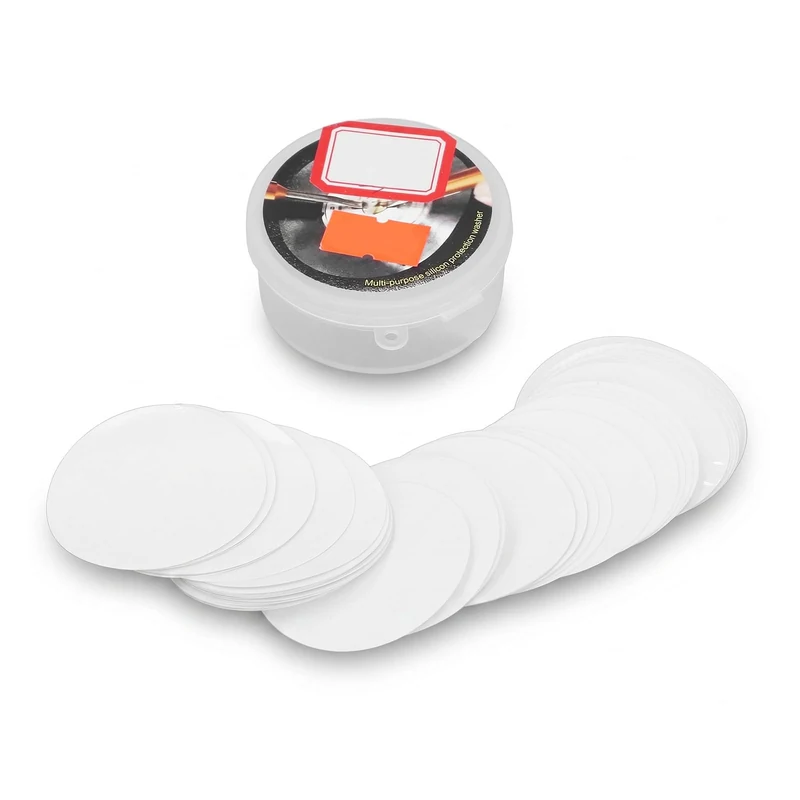
The Bergeon 6938 supplies three plastic protector sheets with a slot around the cannon-pinion/hour-wheel area and a 12 o’clock marker hole. The CHEOTIME assortment supplies fifty static-cling plastic films, each 45 mm in diameter, and one round storage box. Compare the slot and marker access with the circular film coverage needed for your actual dial layout.
A protector’s geometry should leave the required tool access while covering the intended area. The Bergeon offer does not establish an individual sheet diameter, and neither product establishes universal finish compatibility, a pressing-load rating or a damage-free result. Choose the contact and coverage for the particular operation instead of assuming that a larger count makes a protector suitable for every dial.
Examples for the working choice
Questions before you choose
Which profile is intended for hand placement around raised markers?
The Bergeon 7026-PMC-2A has rounded tips and a 90° neck, with that placement role described. Compare its actual access to the dial and hand stack. The 7026-5 is the separate straight, fine-pointed 110 mm model.
When should I compare the boxwood-tip model with steel or brass?
Compare it when the required working contact is pointed boxwood rather than the brass or steel models. Its body is listed as stainless steel; match the actual point shape, opening and clearance to the component.
What distinguishes the plastic battery tweezer from a fine-point model?
The 55-043 has flat, slightly flexible plastic ends, is described as non-conductive and non-magnetic, and is offered for battery transfer and placement. Match that contact to the actual cell access rather than assuming the fine-point shape serves the same need.
Should I choose slotted sheets or 45 mm films for dial protection?
Compare the work-area layout. The 6938 sheets have a slot and 12 o’clock marker opening; the CHEOTIME films provide 45 mm circular static-cling coverage. Check the needed access and finish contact for your operation; neither is a universal protection guarantee.
Continue your selection
Choosing guide ↗Choose Watch-Bench Surfaces, Storage and Cleaning Contacts
Equip the work surface, parts organization and contact tool separately; a mat, cover, mesh, brush and abrasive each solve a different bench need.
Choosing guide ↗Choose Hand Removers, Setters, Presses and Dial Protection
Separate removal, installation, work support and protection, then compare the exact equipment already in the pack.
Choosing guide ↗Choose Tools for Watch Battery Access and Handling
Identify the back, cell access and closing requirement separately; a repair-tool package does not identify a replacement cell or certify the finished watch.
Selected listing details and reviewed source images inform these buying comparisons; exact fit and required service methods remain specific to each product and watch.