Choosing within this department
Case opening & holding
Choose the opener by the way the back is engaged, then choose how the case will be supported. A rubber friction tool, a seam-access knife and a three-point wrench make different contacts; an adjustable case holder provides support rather than doing the opening. This range includes handheld tools, supported snap-back fixtures and a bench opening system, so you can compare the part of your setup that is actually missing.
Start with the back and its contact
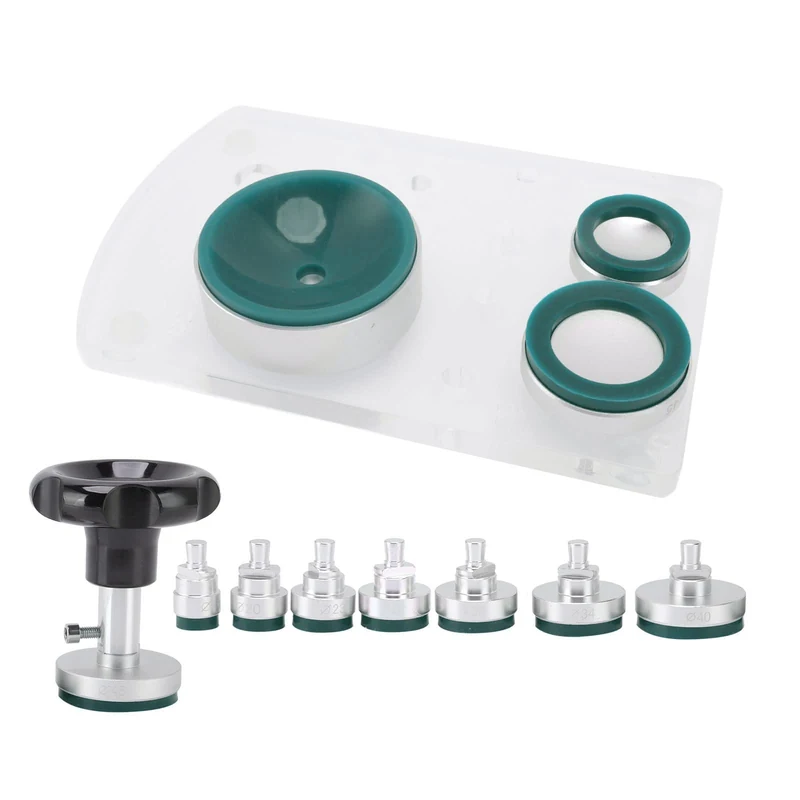
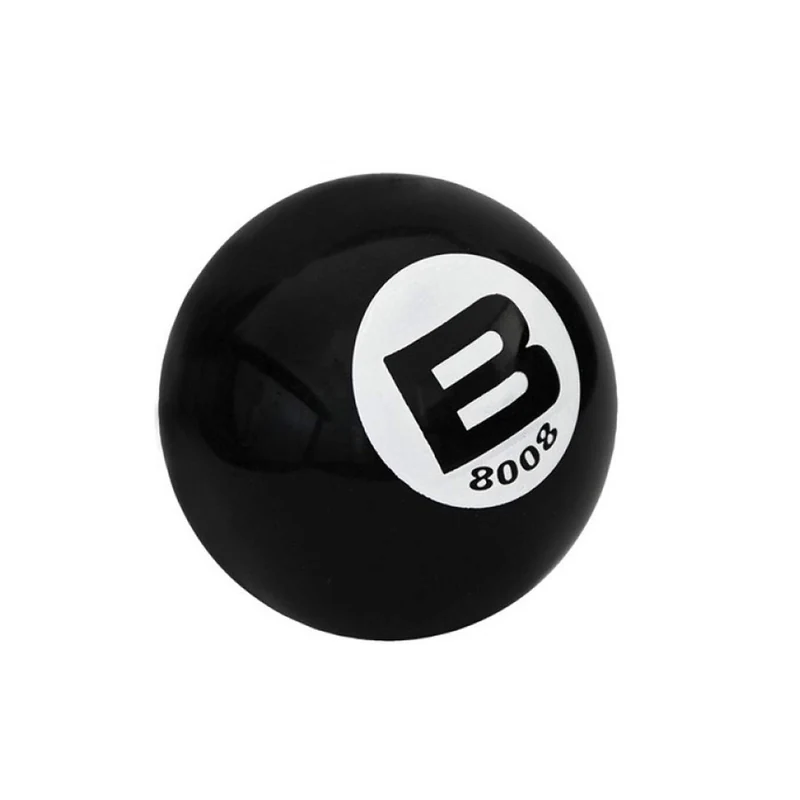
For a rotating back approached by friction, the Bergeon 8008 is a single rubber ball. The YUYTE kit adds a handled arrangement with nine interchangeable soft-silicone contact dies and a storage plate. The distinction is the contact and handling format, rather than a promise that friction will release every back. Despite the word “suction” in the YUYTE listing, no vacuum pump mechanism is established.
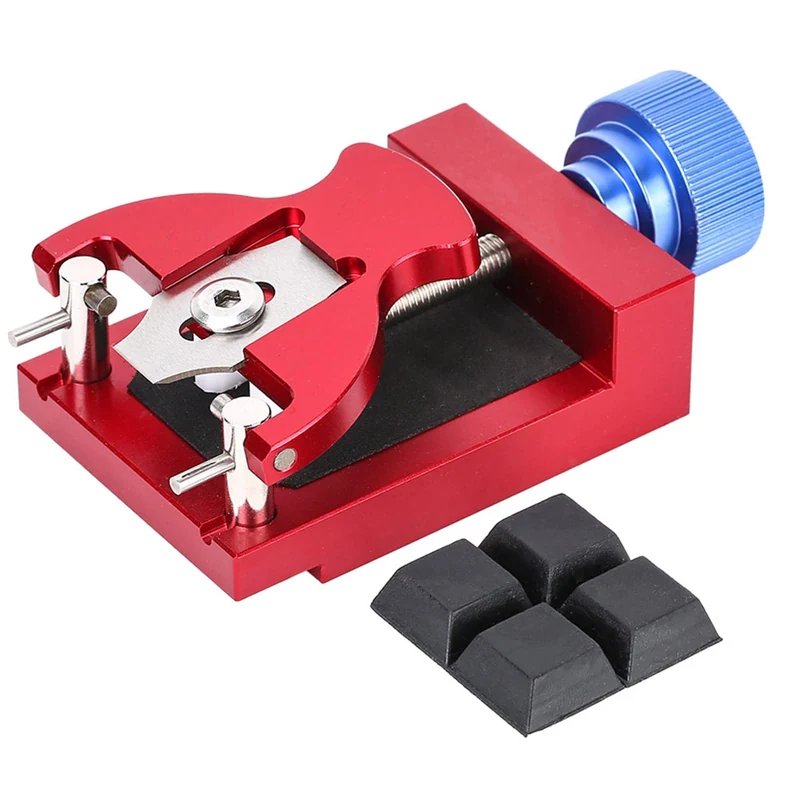
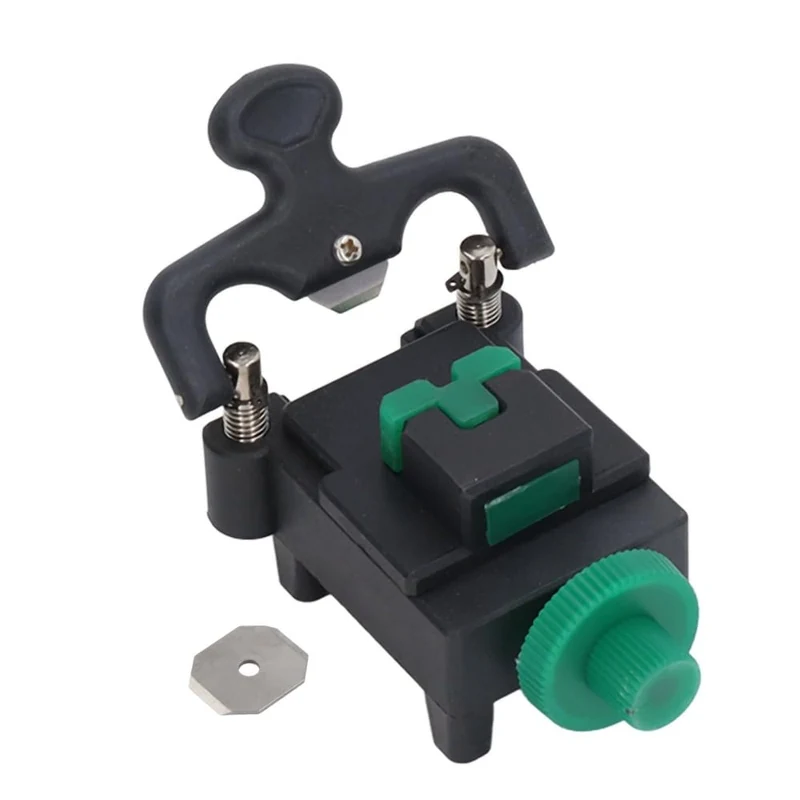
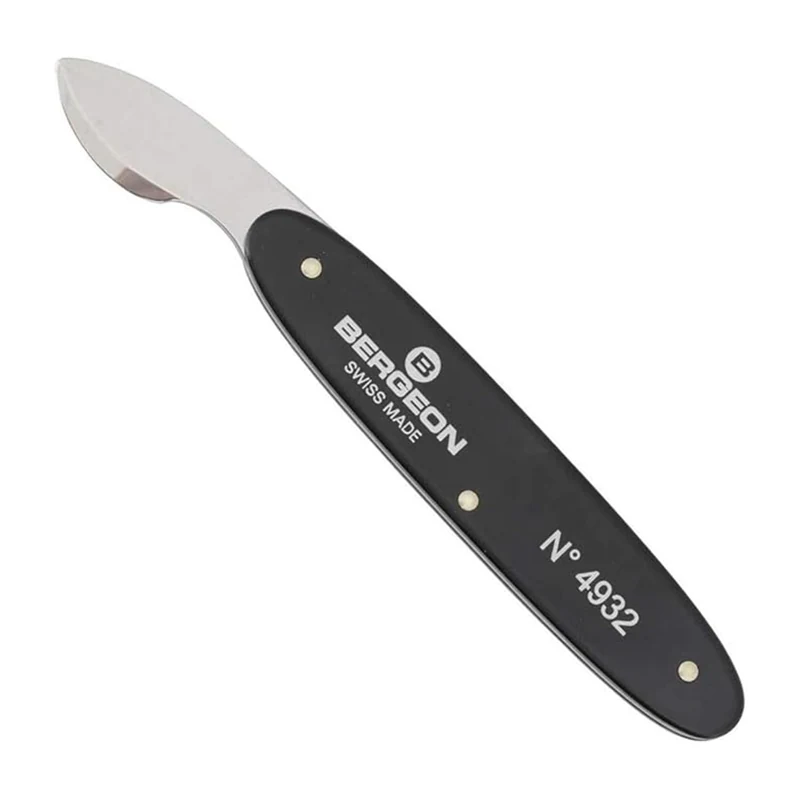
A back that calls for a blade at a seam leads to a different choice: the right-handed Bergeon 4932 is a fixed-blade handheld knife. The Cunyuer fixture provides a supported snap-back opening format with an adjustment knob and foot pad; the AnuLimen fixture adds blade-position and depth adjustment, four rubber-tipped legs and a spare blade. Compare the actual seam access and support, rather than assuming that a supported fixture suits every case shape.
Compare adjustable points with grooved dies
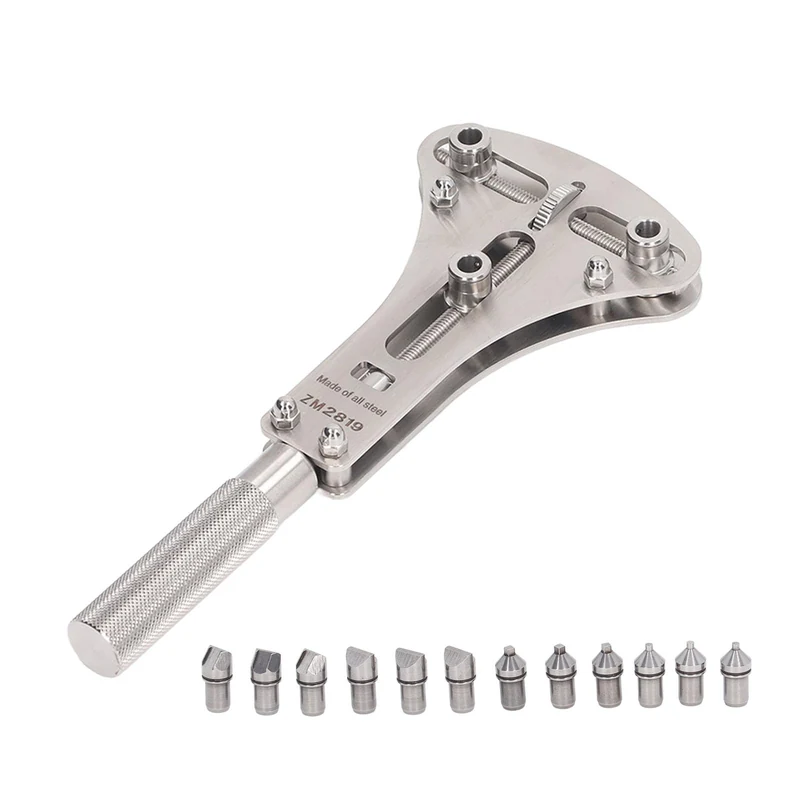
For compatible notched backs, the YWBL-WH wrench uses three adjustable points and comes with twelve claws and a storage box. Its seller-stated 17–53 mm case label is one selection check; the shape and spacing of the actual engagement points still matter. A separate holder is not itemized with this wrench.
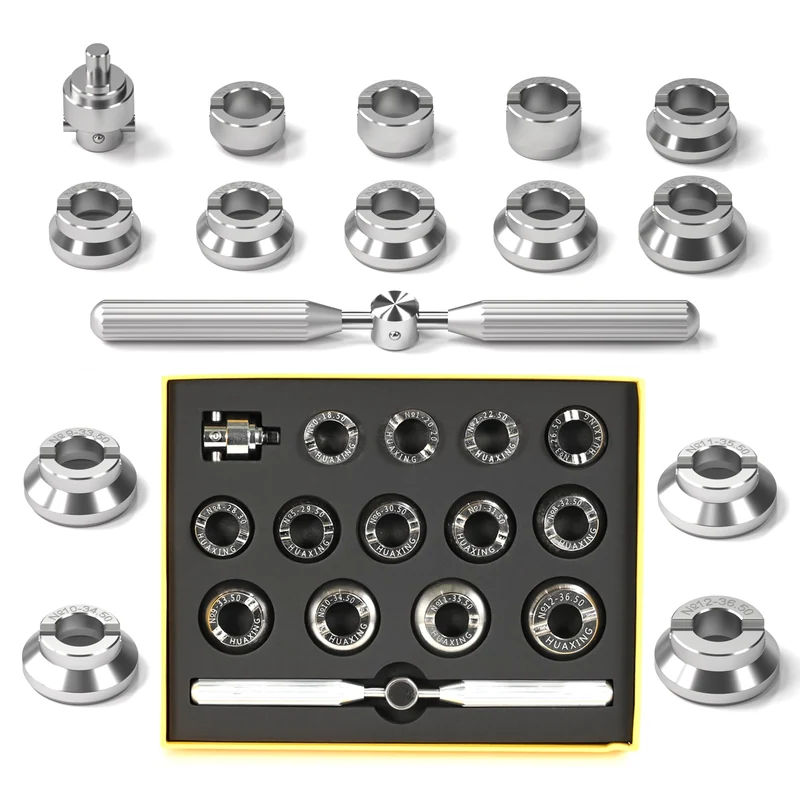
The KZU WBR647 uses a handheld driver and thirteen grooved dies, labeled from 18.5 to 36.5 mm in the listed assortment. This is a different engagement arrangement from three adjustable points. Match the groove profile and receiver as well as the size label. The pictured removable dies carry HUAXING markings while the listing brand is KZU; neither those marks nor similar numbered tool names establish an OEM relationship or interchangeability.
Choose support separately from opening
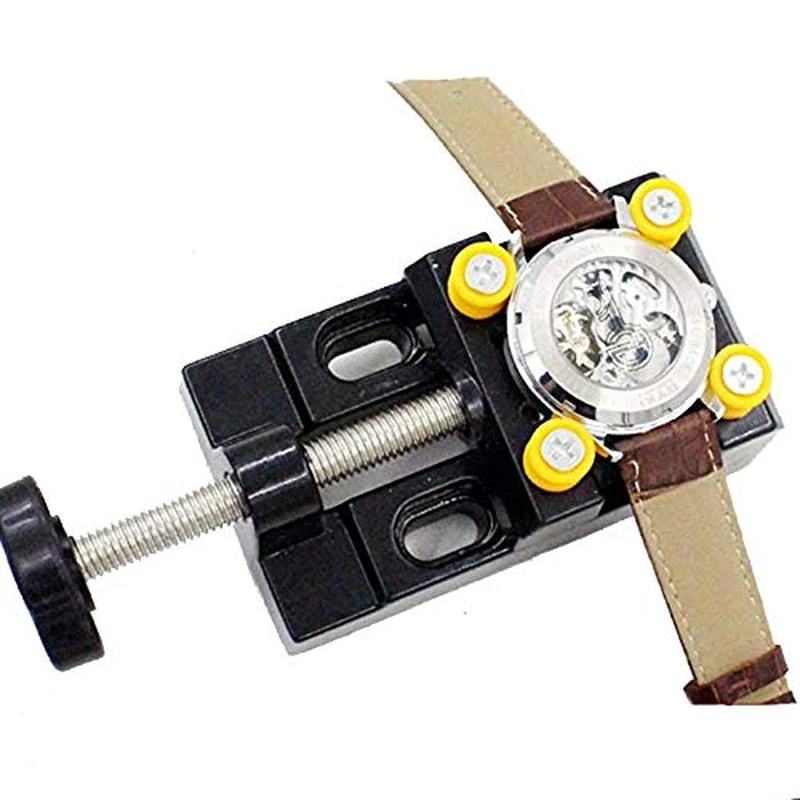
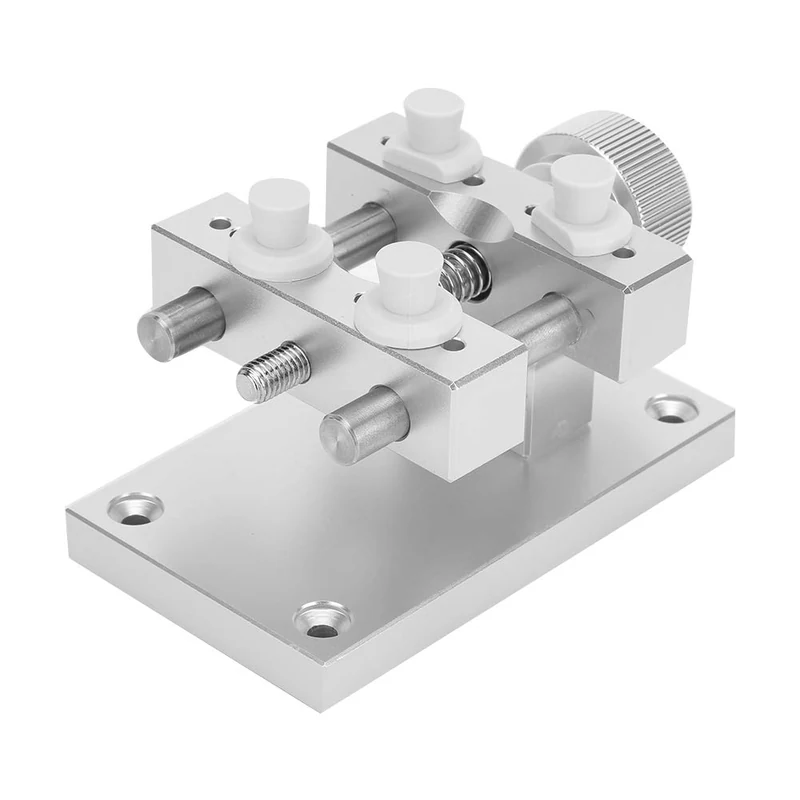
The Dofover holder has a screw-slide bed and four protected posts, with a seller-described 18–52 mm case range. The Joyzan holder instead has two guide rods, a spring and opposed screw-adjusted blocks with four white posts. These are two support constructions to compare for your case and bench arrangement, not alternative opening mechanisms. Joyzan shows four base mounting holes, but mounting bolts and an exact workstation pattern are not established.
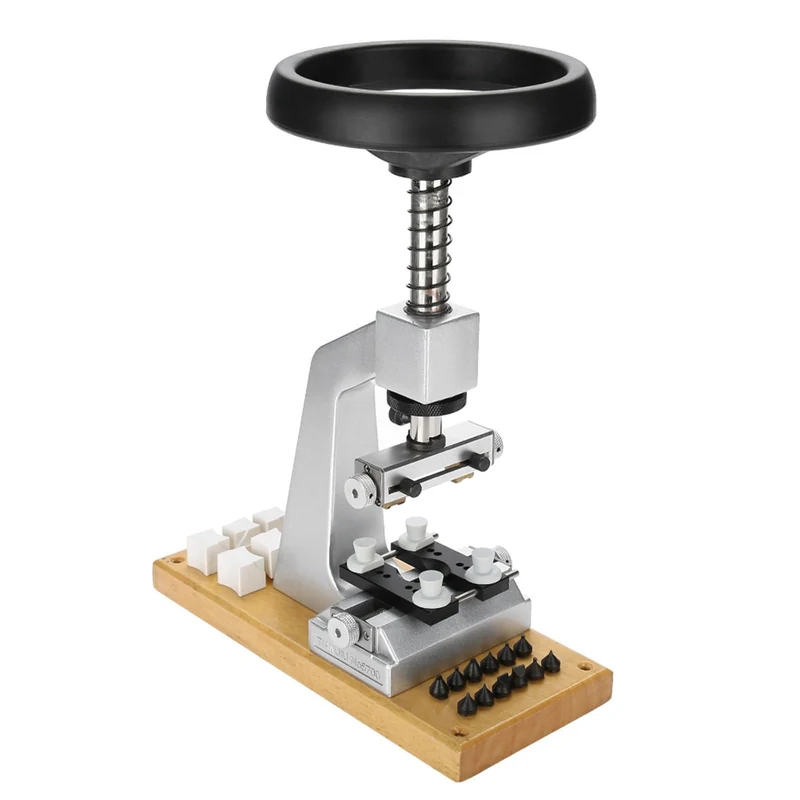
The MEKOTRIN 5700 combines a bench frame with a No. 5674 holder, No. 5675 pawl holder, six grooved rings, twelve fixing molds and twelve opening jaws. Those assortments have different jobs. Its stated 65 mm maximum chuck size and 6–22 mm lug-support-block range refer to different interfaces. Choose this more extensive setup when those documented holding and opening components are needed together, after checking the actual case engagement.
Check useful dimensions before adding tools
Use working-contact information ahead of outside tool dimensions. The YUYTE kit’s 16–66 mm cover-size labels do not establish a universal opening range, and the MEKOTRIN frame dimensions do not describe its stroke. The Bergeon 8008 listing disagrees between 65 and 67 mm for the ball itself, so its exact diameter should be confirmed if that determines your choice.
Opening, closing and confirming the condition of a sealed watch are separate requirements. A supported opener or holder does not become a closing press because it supports a case. If your next need is a press and matching dies, compare that department separately and follow the watch maker’s service requirements; simply closing a back does not certify water resistance.
Examples for the working choice
Questions before you choose
Can a friction ball replace a snap-back knife?
They make different contacts. The 8008 is offered for friction on a rotating back; the 4932 is a fixed blade for seam access. Identify the closure before choosing either, rather than treating the tools as interchangeable.
Does a case holder also open the back?
The Dofover and Joyzan products are holders. They provide adjustable support; choose a separate opener matched to the back. The MEKOTRIN system is a different purchase because it itemizes a bench frame and opening components as well as a holder.
What should I check for a grooved die?
Check the exact groove contact, size and receiving interface. The KZU die labels identify its assortment, but a diameter or a familiar tool number alone does not establish fit to your case or another driver.
Which supported snap opener has a spare blade?
The AnuLimen offer itemizes one spare blade and blade-position/depth adjustment. The Cunyuer offer itemizes an opener and foot pad. Compare that difference if spare-blade provision matters to your setup.
Continue your selection
Selected listing details and reviewed source images inform these buying comparisons; exact fit and required service methods remain specific to each product and watch.